
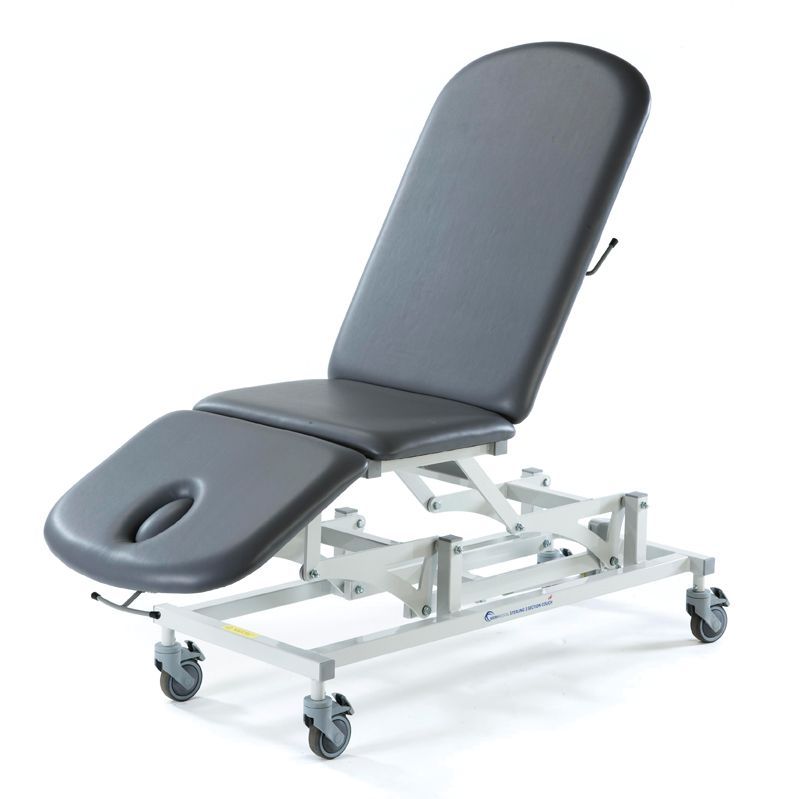
New federal accessibility rules are changing how healthcare providers purchase therapy and treatment tables.
If your clinic, rehab center, outpatient facility, or practice receives federal healthcare funding — including Medicare or Medicaid reimbursements — you will soon be required to provide accessible treatment tables that meet new Medical Diagnostic Equipment (MDE) accessibility standards.*
For many physical therapy, chiropractic, sports medicine, pain management, and rehab-focused clinics, the time to start planning is now.
If your clinic is evaluating ADA-compliant therapy tables or accessible treatment equipment, now is the right time to explore options designed for the new standards.
Explore Electro Medical’s Assist Hi-Low ADA-Compliant Therapy Tables:
In 2024, the U.S. Department of Health and Human Services (HHS) and the Department of Justice (DOJ) finalized new accessibility requirements for Medical Diagnostic Equipment (MDE).
These rules are designed to improve healthcare access for patients with disabilities by ensuring clinics and healthcare facilities provide accessible equipment for examinations, treatment, and patient transfer.
The standards apply to medical equipment including:
For therapy-focused providers, the biggest area of impact is the growing requirement for accessible therapy and treatment tables.
This is the most important question many clinics are asking right now.
That includes many providers who participate in:
This means the rules can apply to:
Many private practices assume ADA equipment rules only apply to government-run hospitals. That is not the case.
If your organization bills Medicare or Medicaid, these accessibility standards may directly affect future equipment purchasing decisions.
The new rules focus heavily on patient transfer accessibility.
In practical terms, federal regulators want patients with mobility limitations to be able to:
Traditional fixed-height therapy tables can make this difficult — especially for:
As a result, adjustable ADA-compliant hi-low therapy tables are becoming increasingly important for clinics seeking compliance readiness.
While the federal standards are technically referred to as “Accessible Medical Diagnostic Equipment” standards, many providers are searching online using phrases like:
In general, accessible therapy tables are designed to improve patient transfer safety and accessibility.
Key features often include:
Height-adjustable hi-low tables are widely viewed as the best solution for meeting accessibility expectations under the new rules.
Explore Electro Medical’s Assist Hi-Low Tables designed for accessible patient care:
The new rules do not require every therapy table in a clinic to be replaced immediately.
However, they do establish minimum accessibility requirements for covered providers.
Facilities generally must ensure:
Physical therapy and rehab-oriented practices may be subject to a higher standard:
This is especially important for clinics where treatment tables are used constantly throughout the patient day.
The compliance deadlines begin in 2026.
That may sound far away, but healthcare equipment purchasing cycles move slowly — and many clinics are already beginning to evaluate accessible treatment table upgrades now.
Waiting until the final deadline may create:
For clinics already considering replacing older fixed-height tables, the smartest approach may be to invest in ADA-accessible hi-low tables now rather than purchase equipment that may become problematic later.
The industry trend is moving rapidly toward powered adjustable treatment tables.
Why?
Because accessible transfer capability is becoming:
Hi-low treatment tables help clinics:
For many clinics, upgrading to ADA-compliant treatment tables is not simply about regulation — it is about improving the overall patient care experience.
PT and rehab clinics may feel these changes more than most healthcare providers.
Why?
Because these facilities:
That combination makes accessible treatment equipment increasingly important.
Patients are also becoming more aware of accessibility rights and expectations. Clinics using outdated fixed-height tables may eventually face:
Healthcare providers should begin evaluating:
These conversations are already happening across healthcare systems nationwide.
Electro Medical offers Assist Hi-Low Tables designed to support modern accessibility and patient care expectations.
These powered treatment tables help clinics:
For clinics researching:
…the Assist Hi-Low series offers a practical path forward.
Explore the Assist Hi-Low ADA-Compliant Therapy Table Collection:
The healthcare industry is clearly moving toward greater accessibility requirements for treatment and diagnostic equipment.
For clinics receiving Medicare, Medicaid, or other HHS funding, accessible therapy tables are quickly becoming an important operational consideration — not just an optional upgrade.
The providers that act early will likely have:
If your clinic is evaluating its next therapy table purchase, now is the ideal time to explore ADA-compliant hi-low treatment table options built for the future of patient care.
Learn more about Electro Medical’s Assist Hi-Low Tables:
*The above is provided for informational purposes only. Please consult your compliance or legal team to verify requirements and obtain guidance specific to your organization.




_______________________________________________________________________________________________________
Discount applies to published website pricing on first order only.
Cannot be combined with other coupons or discounts.
(Max Discount $50.00)